The Evolution of Visual Rhythm: Integrating Colorful 3D Seamless Vector Patterns into Modern Design Workflows
In the ever-evolving landscape of digital aesthetics, few movements have captured the imagination of designers and creators quite like the Memphis design style. Originally emerging in the mid-1980s as a rebellious counter-movement to the sterile minimalism of the International Typographic Style, Memphis design was characterized by its playful use of geometric shapes, bold primary colors, and chaotic yet structured compositions. Today, this retro-futuristic aesthetic has undergone a significant transformation. The raw, flat vector graphics of the past have been reimagined through the lens of contemporary technology, resulting in sophisticated assets such as the Colorful 3d Seamless Vector Pattern. This fusion of nostalgic geometry with modern rendering techniques offers a unique visual language that bridges the gap between analog creativity and digital precision.
Deconstructing the Aesthetic: From Flat Geometry to Volumetric Depth
To understand the value of these modern patterns, one must first appreciate their historical roots. The original Memphis group, led by Ettore Sottsass, utilized squiggles, dots, stripes, and basic shapes like triangles and arches. These elements were applied in high-contrast combinations—think bright reds, yellows, and blues against black or white backgrounds. While visually striking, these early designs were inherently two-dimensional. They relied on line weight and color blocking to create interest.
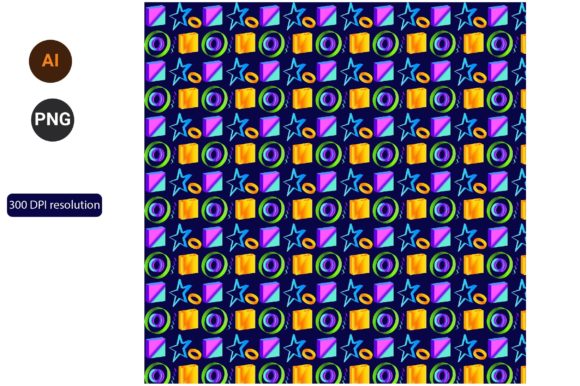
The modern iteration introduces a layer of complexity through three-dimensionality. By applying gradient overlays and subtle shading effects to these classic geometric forms, designers can create a sense of depth without sacrificing the clean lines that define the style. This is where the concept of a Colorful 3d Seamless Vector Pattern becomes particularly relevant. It retains the playful spirit of the 80s but elevates it with a tactile quality that feels tangible even on a screen. The gradients are not merely decorative; they serve to guide the eye, creating a flow that makes the pattern feel alive and dynamic rather than static.
This evolution is not just about adding shadows. It is about creating a seamless loop that can be tiled infinitely without visible breaks. Achieving this level of technical proficiency requires a deep understanding of vector mathematics and spatial arrangement. The result is a background element that can expand to any size, from a small mobile icon to a massive billboard, maintaining its crisp edges and vibrant colors throughout.
The Technical Advantages of Vector-Based 3D Patterns
For professionals working in branding, web development, or print media, the choice of file format and resolution is critical. The specification of a Colorful 3d Seamless Vector Pattern typically includes several key technical attributes that ensure versatility and longevity. Understanding these attributes helps explain why this asset class is preferred over raster-based alternatives like JPEGs or standard PNGs.
- Scalability Without Loss: As a vector file (often provided in editable AI or EPS formats), the pattern is defined by mathematical equations rather than pixels. This means it can be scaled up to the size of a building facade or down to a favicon without any loss of quality. There are no jagged edges or pixelation issues, which is essential for high-resolution printing and retina displays.
- Resolution Independence: The mention of 300 DPI in product descriptions often refers to the intended print output density. While vectors are resolution-independent by nature, providing a high-DPI raster preview allows clients to visualize the texture and gradient smoothness before purchasing. This ensures that the fine details of the 3D effect are preserved when converted to print-ready formats.
- Editability and Customization: An editable AI file empowers the user to modify the source code of the design. A designer can change the hue of a specific gradient, adjust the thickness of a geometric stroke, or rearrange the layout of the shapes to better suit a brand’s identity. This flexibility is invaluable for creating custom packaging or tailored marketing materials.
- Transparency and Layering: The inclusion of a transparent PNG file variant allows for easy integration into various design projects. Whether placing the pattern over a solid color background, a photograph, or another graphic element, the transparency ensures that only the pattern itself is visible, allowing for complex layering effects that add depth to UI/UX designs.
Practical Applications Across Industries
The versatility of these modern Memphis-inspired patterns extends far beyond simple decoration. Their ability to convey energy, creativity, and modernity makes them suitable for a wide array of applications across different sectors.
Brand Identity and Packaging
In the consumer goods sector, shelf presence is paramount. A product package that utilizes a Colorful 3d Seamless Vector Pattern can stand out amidst competitors who rely on minimalist or photographic imagery. The 3D effect adds a premium feel, suggesting quality and attention to detail. For tech startups or creative agencies, these patterns can be used in business cards, letterheads, and logo backgrounds to communicate innovation and a break from tradition. The geometric nature of the design also lends itself well to corporate structures, symbolizing interconnectedness and modular growth.
Digital Interfaces and User Experience
Web designers are increasingly using subtle patterns to add texture to flat interfaces, preventing them from feeling too stark. A low-opacity version of a colorful 3D pattern can serve as a background for landing pages, dashboards, or app screens. The seamless nature of the vector ensures that the background tiles perfectly, regardless of the user's screen size. Furthermore, the playful geometry can be used to create engaging loading animations or interactive hover states, enhancing the user experience by providing visual feedback that is both pleasant and informative.
Print Media and Editorial Design
Magazines, brochures, and posters benefit greatly from the high contrast and vibrancy of Memphis-style art. In editorial design, these patterns can be used to break up long blocks of text, guiding the reader’s eye through the content. The 3D gradient overlays add a layer of sophistication that prevents the design from looking childish, making it appropriate for professional publications as well as youth-oriented magazines. The ability to edit the vector file allows printers to adjust colors to match specific Pantone standards, ensuring brand consistency in physical prints.
Considerations for Implementation
While the benefits are clear, integrating a Colorful 3d Seamless Vector Pattern into a project requires thoughtful consideration. The sheer volume of visual information in a Memphis-style pattern can be overwhelming if not balanced correctly. Designers must be mindful of negative space. Using the pattern as a dominant background element works best when paired with ample whitespace and clean typography. If the pattern is too busy, it can compete with the primary content, reducing readability and user engagement.
Another consideration is the psychological impact of color. The 80s palette is known for its intensity. While vibrant colors attract attention, they can also cause visual fatigue if used excessively. It is often effective to desaturate certain elements of the pattern or reduce the opacity to create a more subdued backdrop. Additionally, accessibility should always be a priority. Ensuring sufficient contrast between the pattern and any overlaid text is crucial for users with visual impairments. Testing the design in grayscale can help determine if the hierarchy of information remains intact.
The Future of Retro-Futurism in Digital Art
As we move further into the digital age, the nostalgia of the 80s continues to influence contemporary design trends. However, this nostalgia is not a mere copy-paste of the past. It is an evolution. The introduction of 3D effects, gradients, and seamless vector technology represents a maturation of the Memphis style. It transforms a once-rebellious artistic statement into a robust, functional tool for modern communication.
The availability of high-quality, editable assets means that creators no longer need to build these patterns from scratch. This democratization of design resources allows hobbyists, educators, and small business owners to access professional-grade visuals that were previously reserved for large design studios. The combination of artistic heritage and technical precision found in a Colorful 3d Seamless Vector Pattern exemplifies how traditional design principles can be adapted to meet the demands of today’s fast-paced, multi-platform media environment.
Ultimately, the appeal of these patterns lies in their duality. They are familiar yet new, chaotic yet structured, retro yet modern. By leveraging the power of vector graphics and 3D styling, designers can harness this energy to create visuals that are not only aesthetically pleasing but also technically superior. Whether used to enhance a brand’s identity, enrich a digital interface, or elevate a printed publication, these patterns offer a timeless solution for those seeking to inject life and movement into their work.