Evaluating the Landing Page Template 3D Fluid Shapes for Modern Web Design Needs
In the contemporary digital landscape, visual impact is often the first determinant of user engagement. As designers and developers seek to move beyond rigid, grid-based layouts, there has been a significant shift toward organic, dynamic, and immersive aesthetic experiences. Among the various design assets available, the Landing Page Template 3D Fluid Shapes represents a specific niche that blends high-fidelity vector graphics with modern motion principles. This analysis explores the technical specifications, aesthetic appeal, and practical applications of this template, helping stakeholders determine whether it aligns with their project requirements compared to other design approaches.
Understanding the Core Aesthetic: From Static to Dynamic
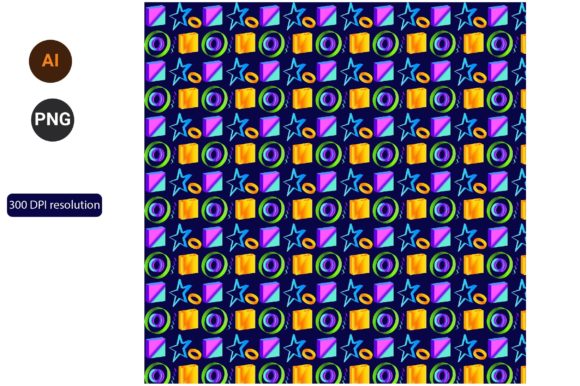
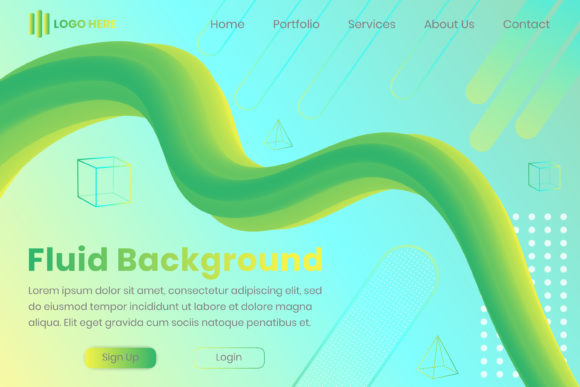
The defining characteristic of the Landing Page Template 3D Fluid Shapes is its departure from traditional geometric rigidity. Instead of sharp angles and uniform blocks, the design leverages colorful fluid shapes and vivid vector backgrounds to create a sense of movement and depth. The visual language relies heavily on neon color palettes, combining green and purple hues in a lucid gradient wallpaper style. This approach is not merely decorative; it serves to guide the user’s eye through the interface while maintaining a "funky liquid shape banner" that captures attention without overwhelming the content.
Unlike standard flat design templates, which prioritize minimalism and speed, fluid shape templates introduce a layer of complexity that mimics natural phenomena. The "dynamic motion modern wave" effect suggests that even static images can imply activity. For audiences aged 20–50, who are accustomed to high-definition mobile interfaces and immersive video content, this level of visual sophistication signals a brand that is current and tech-forward. However, this aesthetic choice requires careful implementation to ensure that the background does not compete with the primary call-to-action elements.
Technical Specifications and Workflow Efficiency
When evaluating design resources, the ease of customization is as critical as the final output. The Landing Page Template 3D Fluid Shapes is built on Adobe Illustrator AI files, a standard that offers significant advantages for professional workflows. Being 100% vector means the graphics are scalable to any extent without loss of quality. This is particularly important for responsive web design, where elements must render crisply on everything from small iPhone screens to large desktop monitors.
- File Format: The inclusion of Adobe Illustrator AI files ensures compatibility with industry-standard editing software. Additionally, the package includes JPG and PNG exports, providing immediate usability for those who may not have direct access to vector editing tools.
- Resolution and Color Mode: With a size of 3000×2000 pixels and an RGB color mode, the assets are optimized for digital displays rather than print. The 72 DPI setting is standard for web use, ensuring fast load times while maintaining clarity on Retina and high-DPI screens.
- Customization Potential: The Memphis and abstract shapes embedded within the fluid forms allow for modular rearrangement. Designers can isolate specific elements to create unique compositions, making the template adaptable to various brand identities.
This technical foundation makes the Landing Page Template 3D Fluid Shapes a robust choice for teams that require flexibility. Unlike raster-based PSD files, which can become bloated and difficult to manage, vector files remain lightweight and editable. This scalability also extends to the asset's potential use beyond web design; the high-resolution nature of the graphics allows them to function effectively as HD wall wallpapers, mobile screens, or presentation backgrounds.
Comparing Fluid Shapes Against Alternative Design Styles
To make an informed decision, it is necessary to compare the Landing Page Template 3D Fluid Shapes against other popular design trends. The two most common alternatives are Flat Minimalist Design and Skeuomorphic/Realistic 3D.
Fluid Shapes vs. Flat Minimalism
Flat design has dominated the web for over a decade due to its simplicity and performance benefits. It relies on clean lines, solid colors, and lack of stylistic embellishment. While flat design is excellent for readability and quick loading, it can sometimes feel sterile or generic. The Landing Page Template 3D Fluid Shapes offers a compelling alternative for brands seeking emotional resonance. The neon gradients and fluid forms add personality and energy that flat design often lacks. However, the tradeoff is increased visual noise. In a flat design, the hierarchy is established through spacing and typography alone. In a fluid design, contrast between the vibrant background and the foreground content becomes paramount. If a brand’s message is data-heavy or text-dense, the fluid background may need heavy opacity adjustments or overlays to maintain legibility.
Fluid Shapes vs. Realistic 3D
Another trend is the use of photorealistic 3D renders, often created in software like Blender or Cinema 4D. These assets offer incredible depth and texture but come with significant downsides regarding file size and rendering time. The Landing Page Template 3D Fluid Shapes achieves a similar "3D" look through clever use of gradients, shadows, and overlapping vectors, but remains entirely 2D in structure. This results in much faster page load speeds and easier integration into HTML/CSS environments. For projects where performance is a key metric, the vector-based fluid approach is superior to heavy WebGL or image-based 3D solutions. It provides the visual depth of 3D without the technical overhead.
Best-Fit Situations and Limitations
Not every project benefits from a funky liquid shape banner or a colorful lucid gradient wallpaper. Understanding the limitations of the Landing Page Template 3D Fluid Shapes is crucial for successful deployment.
Ideal Use Cases:
- Creative Agencies and Studios: Brands that sell creativity, innovation, or digital services benefit from the avant-garde aesthetic. The template visually communicates that the company is at the forefront of design trends.
- Tech Startups and SaaS Products: For products targeting a younger, tech-savvy demographic, the neon and fluid motifs suggest agility and modernity. It works well for landing pages promoting apps, gaming platforms, or digital tools.
- Event and Entertainment Marketing: The energetic color palette of green and purple is naturally associated with nightlife, festivals, and entertainment. The dynamic motion implied by the waves fits well with event promotion.
Situations Requiring Caution:
For corporate entities in conservative industries such as finance, healthcare, or legal services, the Landing Page Template 3D Fluid Shapes may be too bold. These sectors typically prioritize trust, stability, and clarity, which are often conveyed through more subdued color schemes and structured layouts. While the template can be toned down by desaturating the gradients, doing so might negate the primary value proposition of the design. Similarly, e-commerce sites with vast product catalogs may find the fluid background distracting when trying to showcase multiple items simultaneously.
Decision Factors for Implementation
Choosing the right design asset involves balancing aesthetic goals with technical constraints. When considering the Landing Page Template 3D Fluid Shapes, stakeholders should evaluate their team’s capacity for customizing vector files. Since the core file is an Adobe Illustrator AI file, having access to a designer proficient in vector manipulation is essential to fully leverage the template’s potential. Without this skill set, users may be limited to using the pre-made JPG/PNG exports, reducing the flexibility of the design.
Furthermore, consider the long-term maintenance of the website. Vector assets are generally future-proof, but design trends evolve. The specific combination of neon colors and fluid shapes is currently trendy but may date quickly if not paired with timeless typography and layout structures. To mitigate this, it is advisable to keep the UI components (buttons, forms, navigation) simple and neutral, allowing the background to serve as a framing device rather than the focal point.
Conclusion
The Landing Page Template 3D Fluid Shapes offers a sophisticated solution for designers looking to inject energy and modernity into their web projects. Its strength lies in the combination of high-quality vector scalability, vibrant aesthetic appeal, and efficient workflow compatibility. While it may not be suitable for every industry, particularly those requiring conservative visual communication, it excels in creative, tech, and entertainment sectors. By understanding its technical capabilities and comparing it against flat and realistic 3D alternatives, decision-makers can confidently select this template as a tool that enhances user engagement while maintaining performance and scalability standards.